
Before You Buy a Chicken Waterer: What Actually Matters (And What Doesn’t)


What to Know Before Choosing a Waterer for Your Flock
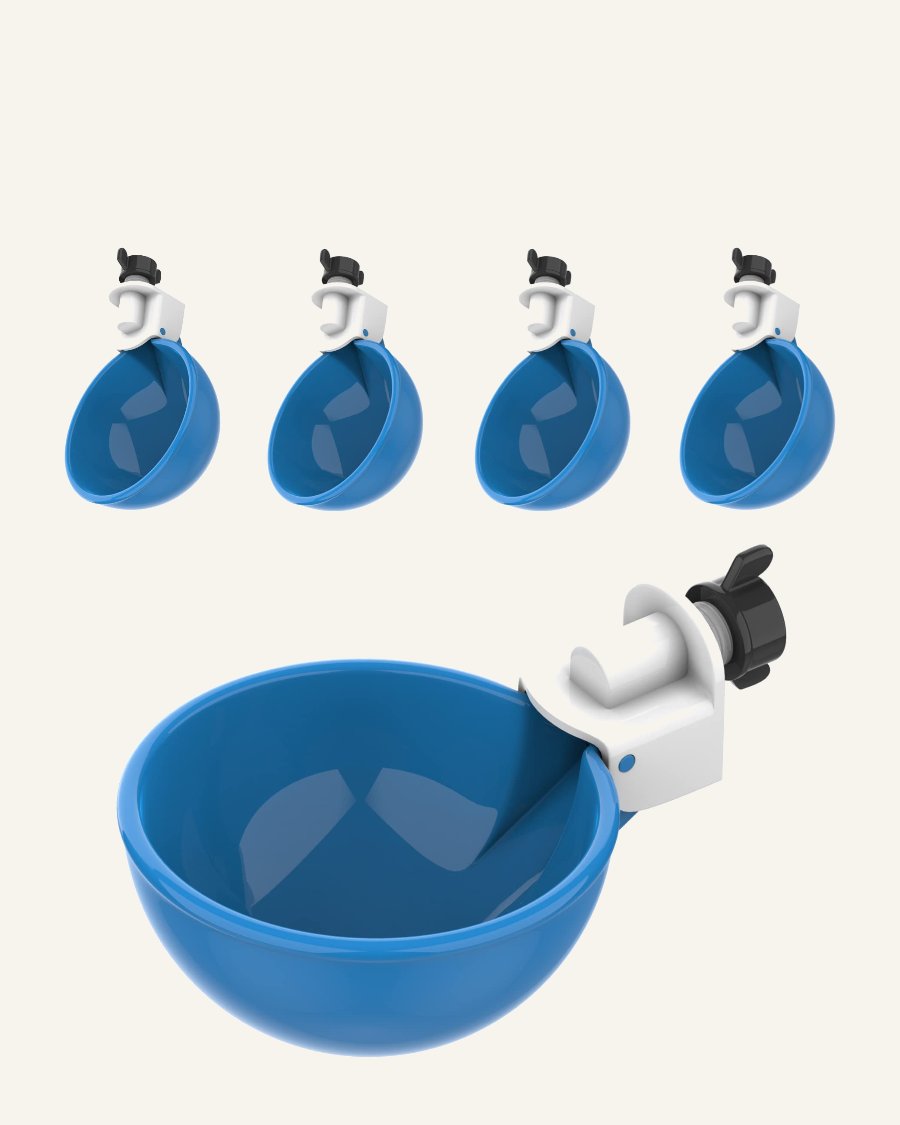
Chicken waterers are one of those “simple” purchases that somehow turn into constant frustration for a lot of backyard keepers. Leaks, tipping, algae buildup, clogged cups, frozen lines, endless refilling. Those usually aren’t the chickens that are the problem.
It’s the system.
And more often than not, it’s chosen for the wrong reasons.
This guide goes deeper than typical buyer advice. It explains how chicken waterers actually fail in real backyard conditions, and what design factors determine whether a system will last months or become a frustration.
Important Things to Consider

1. Long-Term Durability
Products are often tested in controlled conditions. Backyard chicken setups are not controlled. Durability isn’t about whether it survives week one in those environments.
Real-world stress includes:
● Constant pecking and interaction
● Movement and vibration
● Accidental impacts
● Seasonal temperature swings
● Dirt, bedding, and manure exposure
This is why long-term stability depends on:
✔ material memory (ability to return to shape)
✔ maintain seal integrity over time
✔ resist warping under load
✔ keep fittings tight after repeated use
✔ avoid material fatigue at stress points
Real performance only appears after 30–90 days of use. That’s when design weaknesses show up.
2. Water Flow Reliability
This is the single most important factor and where most systems quietly fail, even expensive ones. A waterer can look perfect but still be useless if the flow system is unstable.
A good waterer should:
✔ Maintain a consistent water level
✔ Self-regulate without user correction
✔ Refill smoothly without sticking or flooding
✔ Handle pressure changes without leaking
✔ Work the same in week 1 and month 12
A good watering system should deliver water consistently, whether it's day one or month twelve. When evaluating a waterer, ask:
● How does the water dispensing mechanism work?
● Are replacement parts available if needed?
● Are there reports of clogging or leaking?
● Is the design proven over time?
Reliable hydration isn't a bonus feature. That's the entire purpose of the product.
3. Build Quality
Many watering systems look nearly identical online. They're not.
Small differences in manufacturing quality can create big differences in durability and performance because a chicken waterer doesn’t fail in the first week. It fails after months of sun, mud, pecking, freezing, and constant refills.
What to look for:
✔ Thick, impact-resistant materials
✔ Rigid enough to hold shape under water load
✔ Slightly flexible to absorb pressure
✔ UV resistance (sun exposure destroys cheap plastics fast)
✔ Solid fittings and connectors that don’t loosen over time
✔ No flimsy snap-on parts that depend on “hope” to stay sealed
✔ Quality seals and gaskets
Real durability comes from material behavior under stress, not just initial thickness. But if it feels lightweight and fragile in your hands, it won’t magically improve over time.
4. Ease of Setup
A good system should be easy to install correctly, the first time.
What matters:
✔ Quick and easy assembly instructions
✔ Clear tolerance for hole size
✔ Proper sealing compression
✔ Minimal opportunities for installation errors
✔ No special tools needed for installation
Installation is not a setup step. It is part of the system’s performance because a poorly installed waterer can leak permanently, misalign flow pressure, and weaken seals over time.
5. Cleaning Requirements
Water quality deteriorates in predictable stages:
-
Fresh water
-
Mineral buildup
-
Biofilm formation
-
Algae colonization
-
Bacterial stabilization
Every chicken waterer will require cleaning. There is no such thing as a maintenance-free watering system. The real question is: How much work does cleaning require?
Get an easy-to-clean waterer so you can easily reset the system before stage 3 or 4 becomes dominant.
Look for:
✔ Wide access points or removable parts
✔ Smooth interior surfaces (less algae buildup)
✔ Minimal hidden corners
✔ Designs that don’t trap sludge at the bottom
A waterer that’s hard to clean becomes a “I’ll deal with it later” situation. That’s how bacterial problems start and become a health risk over time.
What's Not as Important

1. Price Alone
Cheap doesn’t mean good. Expensive doesn’t mean reliable.
Price often reflects:
● Branding
● Packaging
● Marketing
● Not necessarily long-term performance
A “cheap” waterer that constantly fails costs more over time than a mid-range system that just works.
2. Fancy Features You Don’t Need
More features don't automatically mean a better watering system. LED indicators, overly complex locking systems, or “advanced flow tech” sound impressive, but additional complexity introduces additional failure points.
Simple systems often outperform complicated ones because there's less that can go wrong.
Things to know:
● Does it improve reliability?
● Does it make cleaning easier?
● Does it reduce maintenance?
If the answer is no, it’s just decoration on a problem.
3. Overpromised Capacity
Big capacity sounds great until you realize:
● Stagnant water becomes dirtier faster
● Heavy systems are harder to clean and refill
● Larger setups don’t fix poor flow design
Bigger isn’t always better. Better design is better.
4. Brand Claims Without Evidence
Every manufacturer claims their product is the best and is loaded with buzzwords.
"Revolutionary."
"Advanced."
"Professional-grade."
"Premium."
None of these terms guarantees performance.
What's more important is whether they provide:
● Clear specifications
● Detailed installation guidance
● Real-world usage information
● Transparent customer support
Focus on how the waterer works. Substance matters more than slogans.
5. How It Looks in Product Photos
A beautifully staged coop photo tells you almost nothing about durability or reliability.
Good lighting doesn't prevent leaks.
Professional photography doesn't improve water flow.
Look beyond the marketing images and evaluate the actual design.
|
DOs |
DON’Ts |
|
✅ Prioritize reliable water flow over flashy features ✅ Choose durable materials that can withstand daily use and outdoor conditions ✅ Check installation requirements before purchasing ✅ Consider how easy the system will be to clean ✅ Read reviews that mention long-term performance, not just first impressions ✅ Look for designs with replaceable parts when possible ✅ Match the waterer to your flock size and setup ✅ Consider compatibility with your water source (bucket, pipe, or direct line setup) ✅ Think about cold-weather performance if you live in freezing or seasonal climates |
❌ Buy based on price alone ❌ Assume all waterers perform the same because they look similar ❌ Ignore mounting, drilling, or installation requirements ❌ Choose a system solely because it has the most features ❌ Overlook cleaning and maintenance needs ❌ Rely on marketing claims without understanding how the system actually works ❌ Assume a bigger capacity automatically means better convenience ❌ Expect any waterer to be completely maintenance-free ❌ Not Thinking About Long-Term Conditions |
A good chicken waterer isn’t complicated. It doesn’t need gimmicks or flashy claims.
It is not impressive because of what it adds.
It’s impressive because of what it removes:
● Constant checking
● Daily adjustments
● Cleaning frustration
● Unpredictable performance
The goal is simple: a system that works consistently in real conditions, requires minimal attention, and quietly supports flock health without becoming another chore.
If it doesn’t do that, it’s not a solution. It’s just another task in disguise. It should quietly do its job in the background, day after day, without needing attention. The best watering systems are the ones you hardly think about. They work reliably, hold up to daily use, and continue delivering value season after season.
That’s why experienced poultry keepers often prioritize durability, dependable performance, and easy maintenance. It’s also why Lil'Clucker focuses on these qualities. Because in poultry care, the simplest systems are often the ones that last.
In the end, the best chicken waterer isn’t the one that promises the most. It’s the one you can count on, year after year.

Send us a photo of your bucket or coop and what you are trying to do. The Lil'Clucker team will answer, usually the same day.
Send us a photo and the Lil'Clucker team will answer, usually the same day.
Message the farmKeep reading


