Home /All poultry essentials /Horizontal Chicken Waterer Nipples - Pack of 15
Horizontal Chicken Waterer Nipples - Pack of 15
Best sellerIn stock
Tested on our own flock
30-day guarantee
Bit and tool in the pack
We answer your questions
Product details
Horizontal peck-activated waterer nipples with a stainless pin, sold in packs of 15. Each nipple measures 0.60" × 0.60" with a 1.25" body, and installs through a drilled hole using the supplied rubber washer on the outside and a wingnut inside.

For gravity-fed supplies under 3 PSI. Fits buckets, barrels and PVC lines. Available in orange or blue.
Shipping & returns
Ships from the US, arriving in 3–5 business days. Free shipping on orders over $50.

Changed your mind? Returns are accepted within 30 days, with no restocking fee.

Horizontal Chicken Waterer Nipples - Pack of 15

5.0 4 reviews Orange or blue0.60" × 1.25" · gravity fed, under 3 PSI

Fifteen peck-activated drinking points for the containers you already have. Nothing sits in the open to fill with bedding or mud — the bird nudges the pin, drinks, and the valve shuts behind her. The drill bit and install tool are in the pack.

Fifteen peck-activated drinking points for the buckets, barrels and pipe lines you already have.

Choose your pack
In the pack
15 nipples
Peck-activated, stainless pin
15 washers and wingnuts
Seals through the container wall
Drill bit
The right size for the thread
Install tool
Fits your drill, or tighten by hand
Order today — ships within 1 business day, estimated delivery by Sep 29 Ships within 1 business day — estimated delivery by Sep 29
Tested on our own flock
30-day guarantee
Bit and tool in the pack
We answer your questions
Product details
Horizontal peck-activated waterer nipples with a stainless pin, sold in packs of 15. Each nipple measures 0.60" × 0.60" with a 1.25" body, and installs through a drilled hole using the supplied rubber washer on the outside and a wingnut inside.

For gravity-fed supplies under 3 PSI. Fits buckets, barrels and PVC lines. Available in orange or blue.
Shipping & returns
Ships from the US, arriving in 3–5 business days. Free shipping on orders over $50.

Changed your mind? Returns are accepted within 30 days, with no restocking fee.

Key features

Built for buckets, barrels and pipe

Peck-activated, sealed with a washer and wingnut, and nothing left standing in the open.

Peck-activated, and nothing left standing in the open.
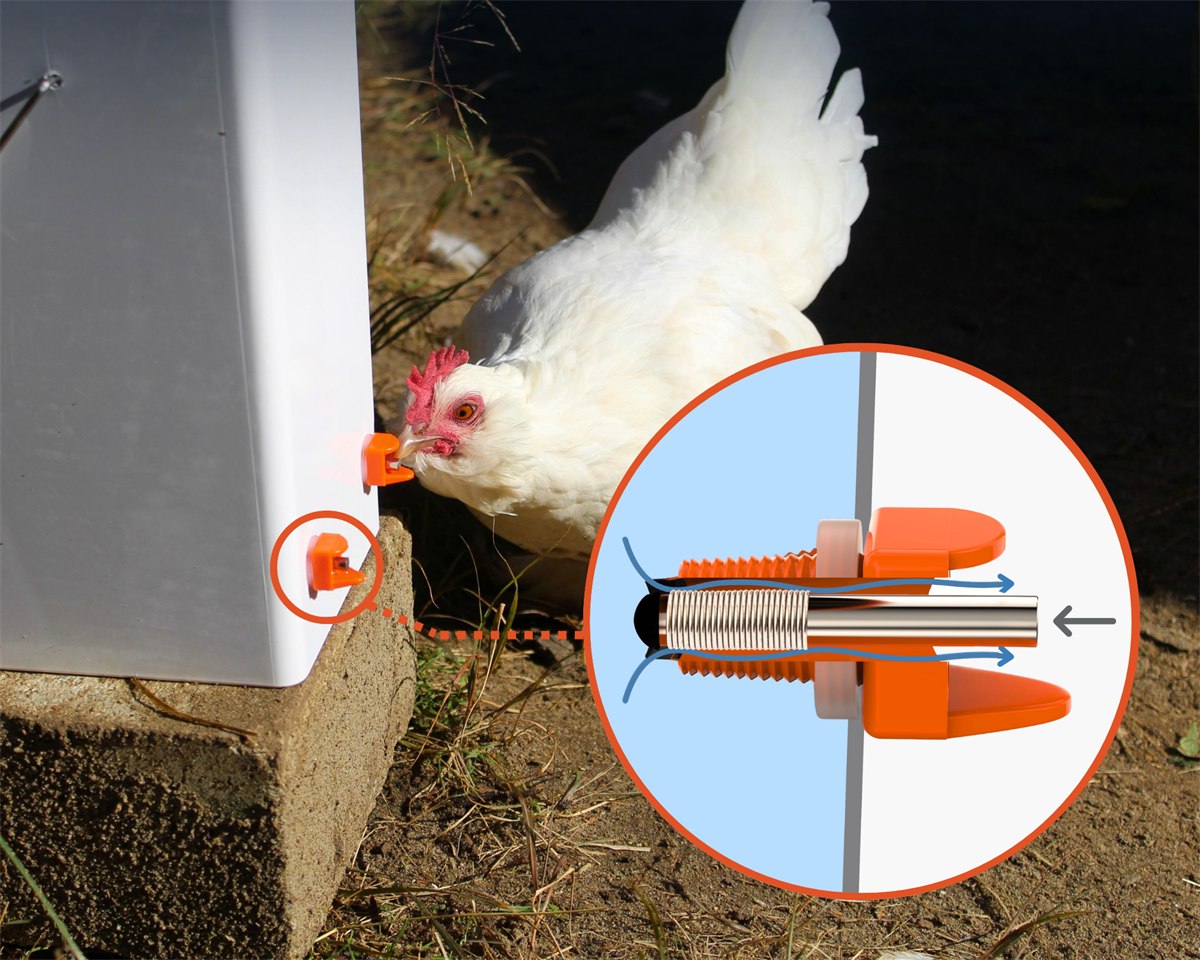
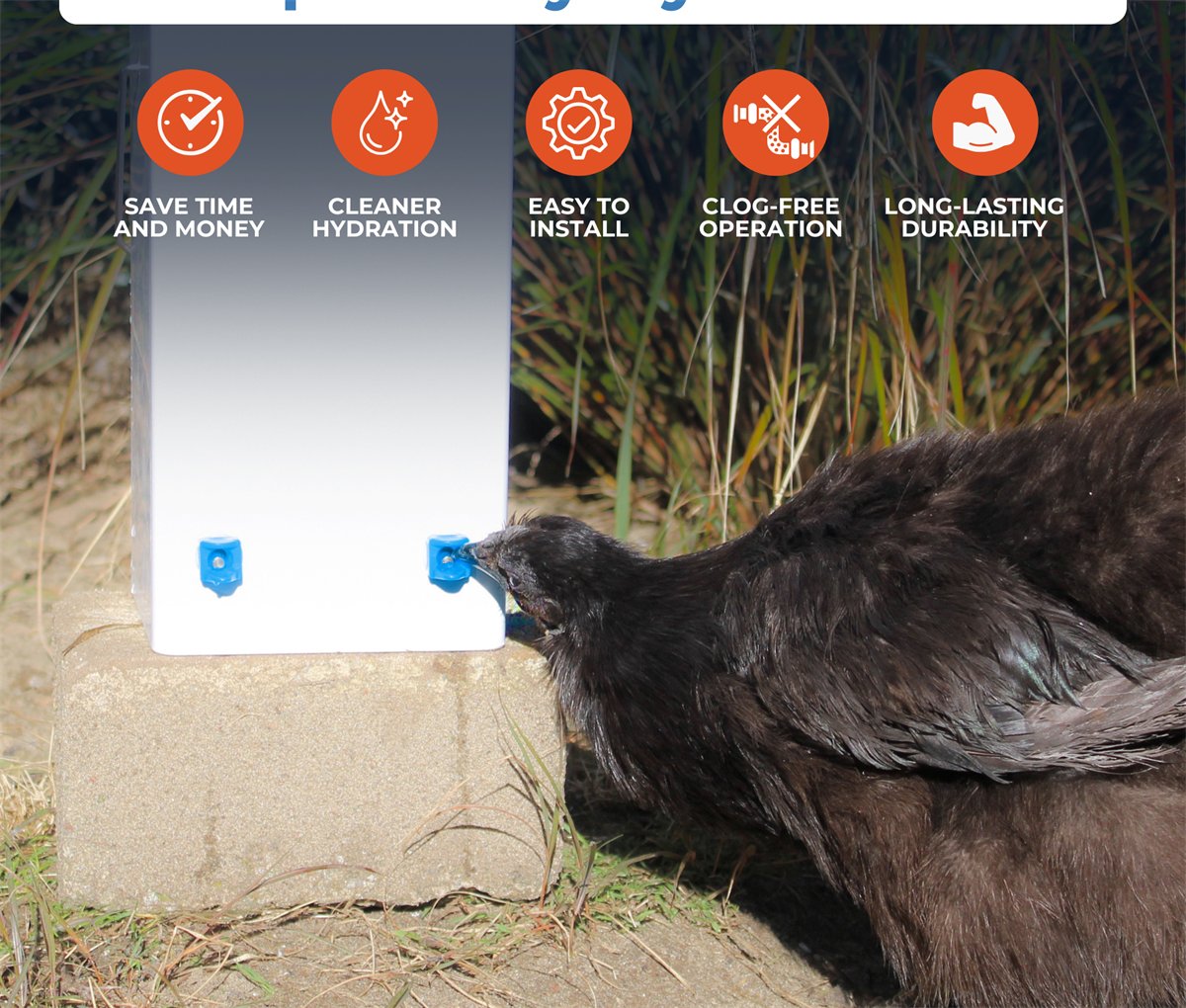
A hen drinking from a nipple fitted to the side of a container
A peck is all it takes

Birds nudge the stainless pin and drink from the cupped lip. Let go and it shuts, so nothing drips into the bedding between drinks.
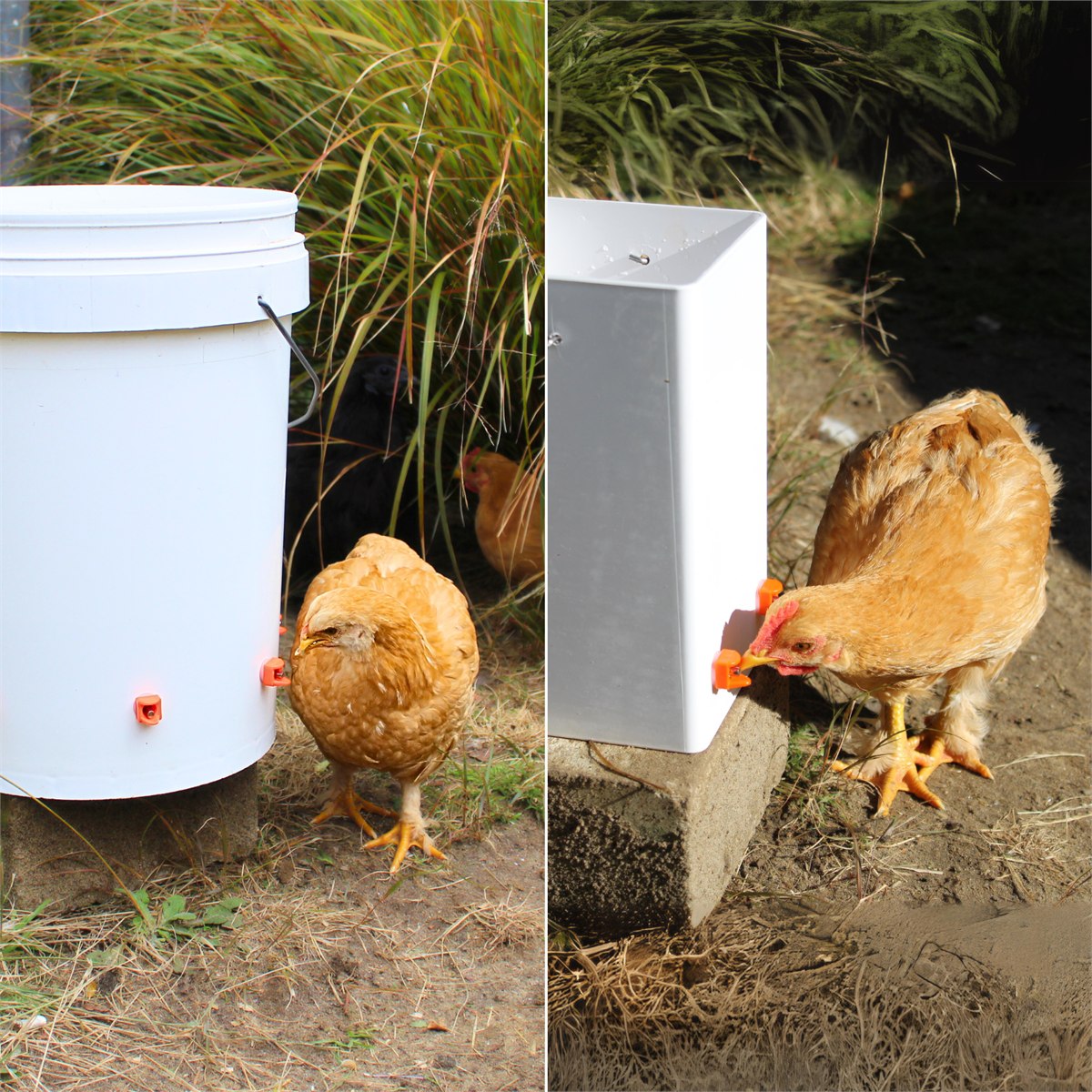
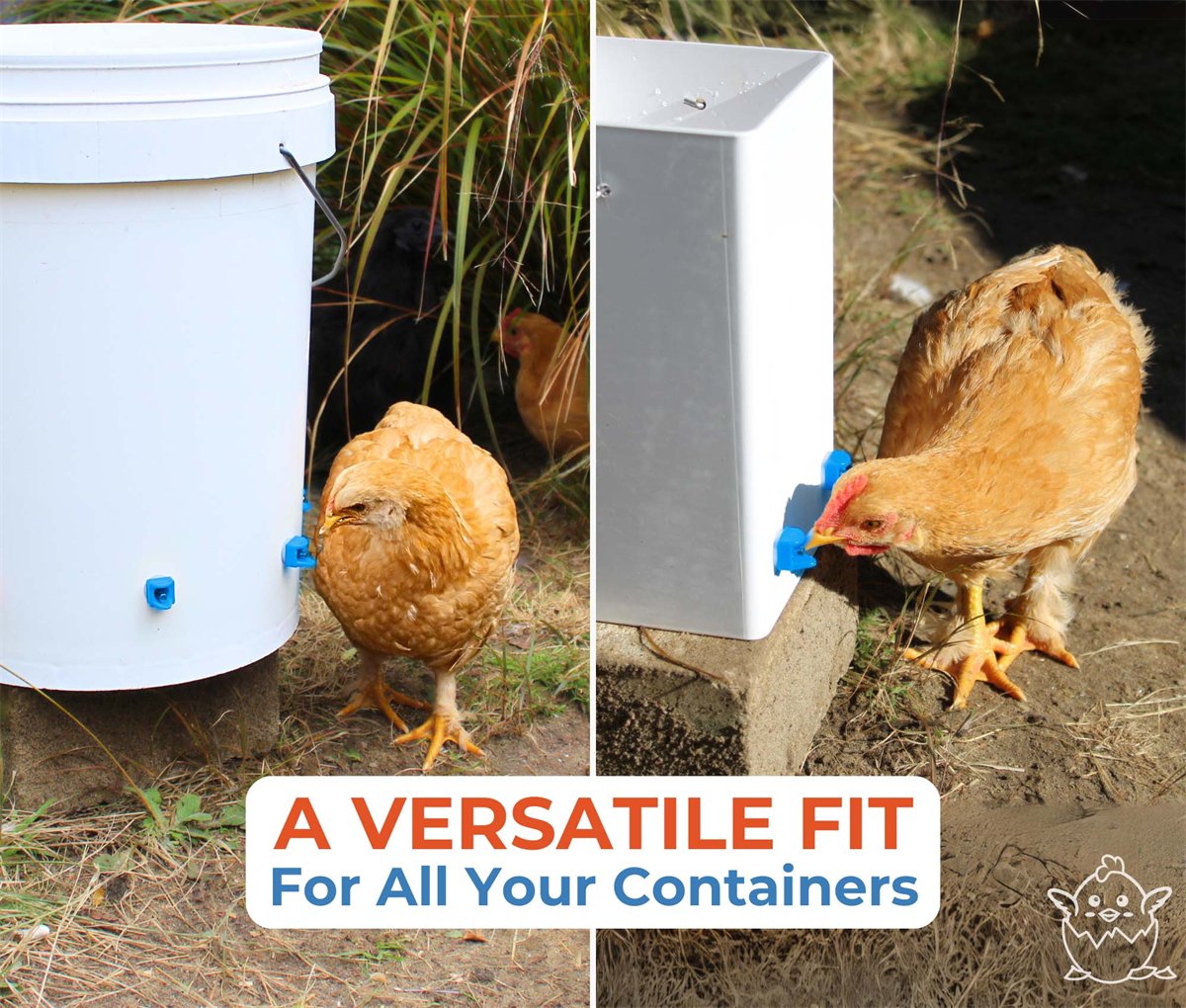
Nipples fitted to a bucket, a barrel and a length of pipe
Buckets, barrels or pipe

Drill a hole at least 1" up from the bottom, seal it with the washer and wingnut, and the container you already own becomes a waterer.
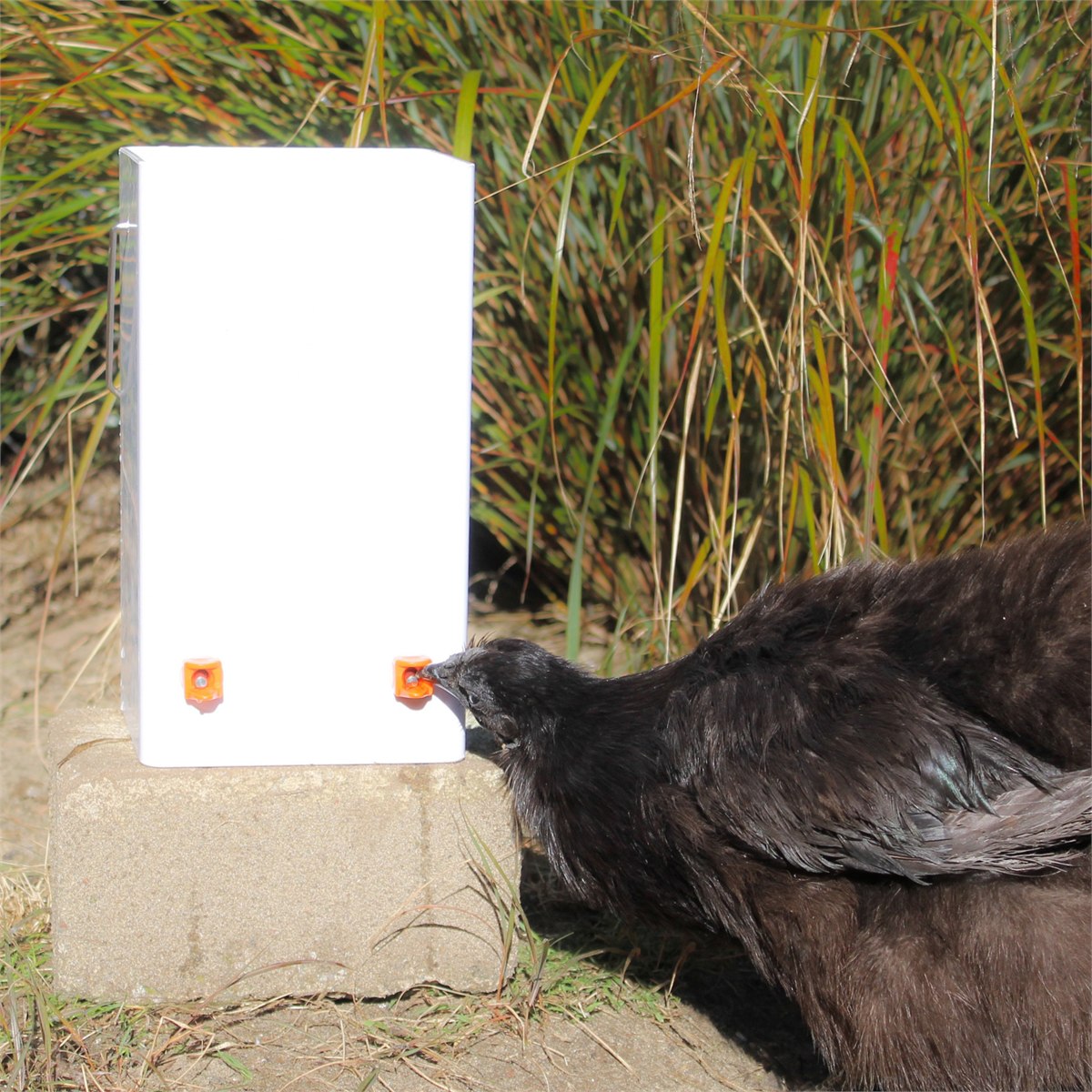
A nipple delivering clean water with no open bowl below it
Nothing left in the open

No bowl for bedding, droppings or mud to land in — which is why they hold up better through winter and in messy runs.

How it works

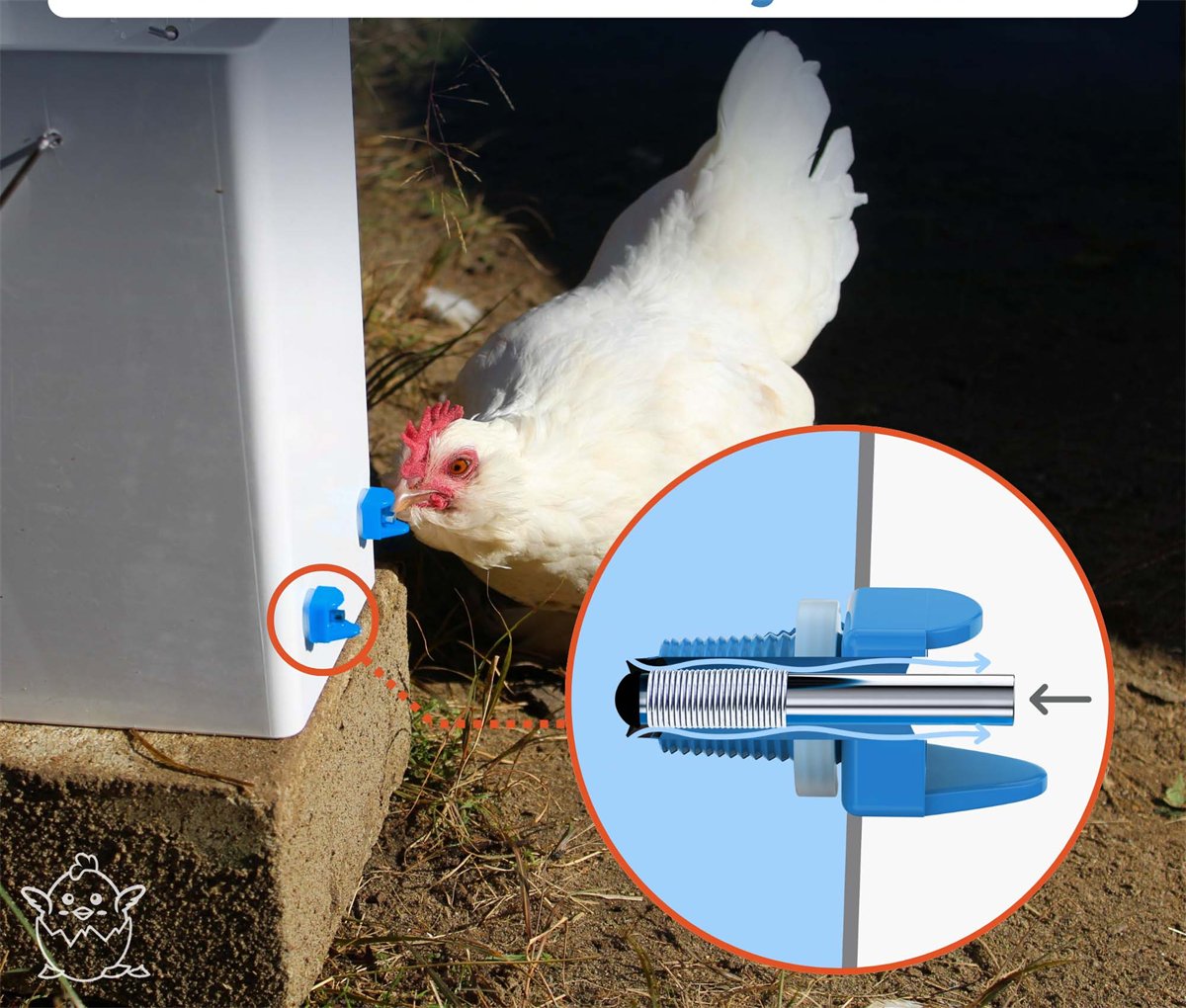
A peck, and the water comes

Each nipple has a stainless pin the birds nudge with their beak — water while they drink, nothing when they stop.

A hen pecking the pin of an orange nipple fitted to a container, with a close-up of the beak on the pin
1
The bird pecks the pin
A nudge on the stainless pin opens the valve, and water collects on the cupped lip where she can drink it.
2
She stops, it stops
Take the pressure off and the valve closes again, so the water stays in the container rather than on the ground.
Gravity fed, under 3 PSI
Run them from a bucket, barrel or a gravity-fed line — never straight off household mains.
Drill 1" up from the base
That leaves room for grit to settle below the nipple instead of working into the seal.
Rinse the pin if it drips
Dirt in the seal is the usual cause. Unscrew by hand, push the pin in, rinse it under running water and refit.

Help me choose

Nipples or cups?

We sell both, and they suit different flocks. Here is how we would call it.

We sell both, and they suit different flocks.

Current product
Choose the nipples if…

Your flock is hens, you are watering from a bucket, barrel or pipe line, and you would rather have nothing sitting in the open to foul. They hold up better through winter and in muddy runs — and your birds will need a day or two to learn them.

Choose the cups if…

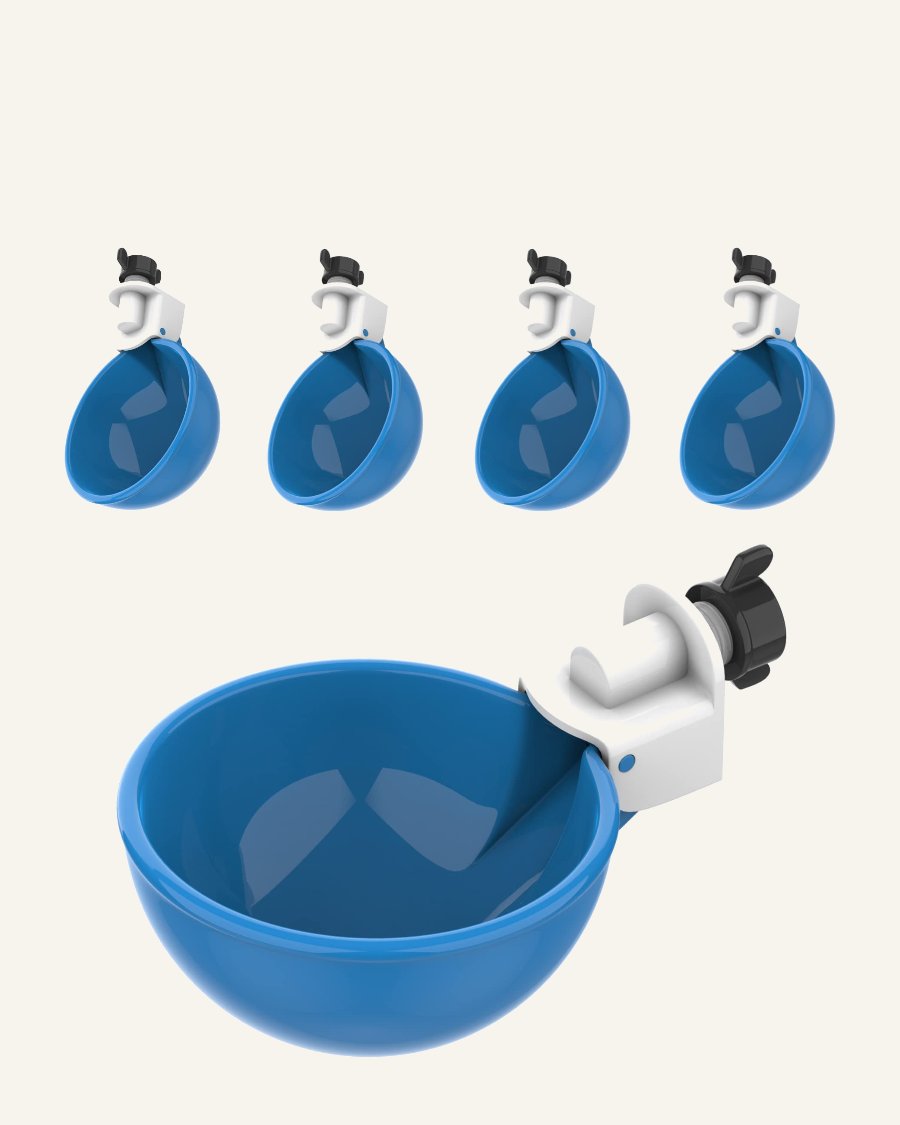
You keep ducks, geese or a mixed flock, or you would rather the birds drank naturally from an open 3" bowl with no learning involved. The cups refill themselves from the same kind of gravity-fed setup.

See the waterer cups →

Comparison

Why keepers switch to ours

Why choose Lil'Clucker?

A closer look at the details that matter.

The details that make the difference.

Low-cost alternatives
Peck-activated valve
Lil'Clucker: A stainless pin the birds nudge — water while they drink, closed when they stop. Water while they drink, closed when they stop.
Low-cost alternative: Cheap valves stick open and dribble all day. Cheap valves stick open and dribble.
Sealed with washer and wingnut
Lil'Clucker: A rubber washer outside and a wingnut inside, tightened by hand or with the tool provided. Rubber washer outside, wingnut inside.
Low-cost alternative: Push-fit or tape-sealed fittings that weep. Push-fit or taped fittings that weep.
Drill bit and tool included
Lil'Clucker: The right bit and an install tool come in the pack, so nothing else to buy. The right drill bit and install tool are in the pack.
Low-cost alternative: Work out the hole size yourself. Work out the hole size yourself.
Nothing standing in the open
Lil'Clucker: No bowl to fill with bedding, droppings or mud. No bowl to fill with bedding or mud.
Low-cost alternative: Open trays foul and need daily emptying. Open trays foul and need emptying.
Real setup support
Lil'Clucker: Printed install and training card, and we answer setup questions ourselves. Printed install and training card, plus help from us.
Low-cost alternative: Support can be limited with marketplace-only sellers. Support can be limited elsewhere.

Setup

Install in four steps

Ten minutes and a drill — the bit and the install tool are both in the pack.

1
Drill

Drill a hole at least 1" up from the bottom of the container with the bit provided, then clean the debris off the edge of the hole.

2
Insert

Put the rubber washer onto the nipple thread and push the nipple into the hole.

3
Tighten

Fit the install tool into your drill and tighten slowly — slow is best — or tighten it by hand if you prefer.

4
Wingnut

With the long side of the nipple facing down, screw the wingnut onto the thread inside the container and check you have a good seal.

Got a drip? Dirt or debris around the seal is a common cause. Unscrew the wingnut and nipple by hand, push the metal pin in and rinse it under running water, rinse the container out, then refit with the washer on the outside and tighten the wingnut.

Customer reviews

What keepers say about this product

5.0/5 · 4 verified reviews

Straight answers

Questions about this product

If your setup is unusual, message us — we will tell you honestly whether it will work before you buy.

We answer these ourselves Usually the same day, from the farm.
Do the birds need training?
A little, yes. Take the other water sources away, fill the container, gather your birds and tap the nipples so water is sitting on the lip. Once one bird starts drinking, the others soon learn.
What water pressure do they need?
A gravity-fed supply under 3 PSI — a bucket, a barrel or a gravity line. Never plumb them straight off household mains.
Do they leak?
They should stay dry between drinks when installed and maintained correctly. If one starts dripping, dirt or debris around the seal is a common cause. Remove the nipple, rinse the pin and seal under running water, rinse the container, then refit it with the washer on the outside and tighten the wing nut.
What can I install them into?
Buckets, barrels and PVC lines. Drill at least 1" up from the bottom of the container so grit settles below the nipple rather than working into the seal.
Nipples or cups?
Nipples suit hens, and they hold up better through winter and in messy runs because nothing sits in the open to foul. The cups suit ducks, geese and mixed flocks, and need no learning at all.
Is there any difference between the colours?
No — orange and blue are the same nipple. Pick whichever you can spot most easily in your coop.